
The Dawn of a New Era: Angus Taylor Secures Decisive Victory as Liberal Leader with a Mandate to Reshape Australia’s Future
Taylor’s commitment to cutting red tape and burdensome workplace regulations is intended to empower small businesses and increase national productivity by fostering an environment where private investment can thrive without government interference.
OPINION & VOICES
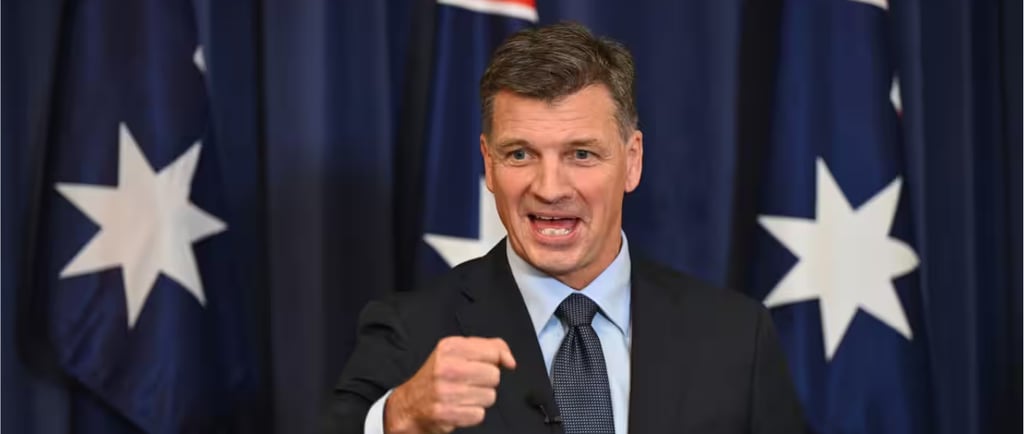
The recent leadership transition within the Liberal Party has positioned Angus Taylor as the pivotal figure tasked with steering Australia’s primary opposition toward a new era. By securing a decisive victory in the leadership ballot, Taylor has taken the helm at a moment he describes as the most challenging since the party's inception in 1944. His message to the nation and his colleagues is unambiguous: the party must embrace profound change to remain a relevant force in Australian public life. This leadership win isn't just a title change; it represents a fundamental shift in strategy aimed at recapturing the trust of a weary electorate.
At the heart of Taylor’s vision for a more prosperous Australia is a robust focus on restoring the standard of living, which he argues has suffered under current economic management. His policy platform centers on aggressive cost-of-living relief, driven by a commitment to lower inflation, reduced interest rates, and the elimination of what he terms "bad taxes." Taylor is particularly vocal about protecting the financial future of young Australians, with home ownership initiatives standing as a cornerstone of his economic agenda. By advocating for smaller government and fiscally responsible spending, he aims to create an environment where productivity and individual prosperity can flourish once more.
The new leader has also signaled a significant pivot in immigration policy, advocating for a "higher standards, lower numbers" approach. Taylor’s perspective is that immigration must serve the national interest first, ensuring that intake levels align with existing infrastructure and housing supply. Central to this is a proposed "values-based" vetting process. He has stated that the door must be closed to those who do not subscribe to core Australian beliefs or who might bring external conflicts into the domestic sphere. This policy is designed to protect the "Australian way of life" while ensuring that the migration system supports economic needs without overwhelming local communities.
In the realm of energy and technology, Taylor continues to champion a technology-over-taxes philosophy. His approach to the energy transition emphasizes the use of gas as a critical firming fuel to ensure the reliability and affordability of the power grid. Rather than government mandates or subsidies for specific technologies like electric vehicles, he favors a consumer-driven model supported by strategic infrastructure investment, such as the rollout of charging stations. For regional Australia, his focus remains on digital connectivity, viewing high-speed internet as an essential utility for modern business productivity.
> "The Liberal Party is in the worst position that it has been since it was founded in 1944. I don’t shy away from this, and I know many of our supporters are angry. The choice is simple for the Liberal Party—change or die, and I choose change. If we are united and focused, and put the Australian people first, we can confront the challenges of the times."
Taylor’s leadership is defined by a "back to basics" approach that prioritizes national values and economic resilience. He has openly acknowledged past policy missteps, particularly regarding taxation and workplace flexibility, and is now positioning the Coalition to provide a stark contrast to the current government's trajectory. As he moves to formalize these policies in the coming months, his focus remains on holding the government to account while offering a clear, conservative alternative that emphasizes individual freedom, security, and a renewed love for the country.
All rights belong to their respective owners. This article contains references and insights based on publicly available information and sources. We do not claim ownership over any third party content mentioned.
DAILY WA © 2025
Daily WA Online is an independent news and media platform covering Western Australia. Owned by TMFS International Pty Ltd., we publish local stories, business insights, lifestyle features, and community voices for the digital era.