
The Future of Ophthalmic Surgery: Inside the New $750,000 Vitreo-Retinal Suite at St John of God Bunbury Hospital
Exploring the high-precision Alcon Unity VCS technology and the community-funded initiative that is transforming emergency retinal treatment for regional patients.
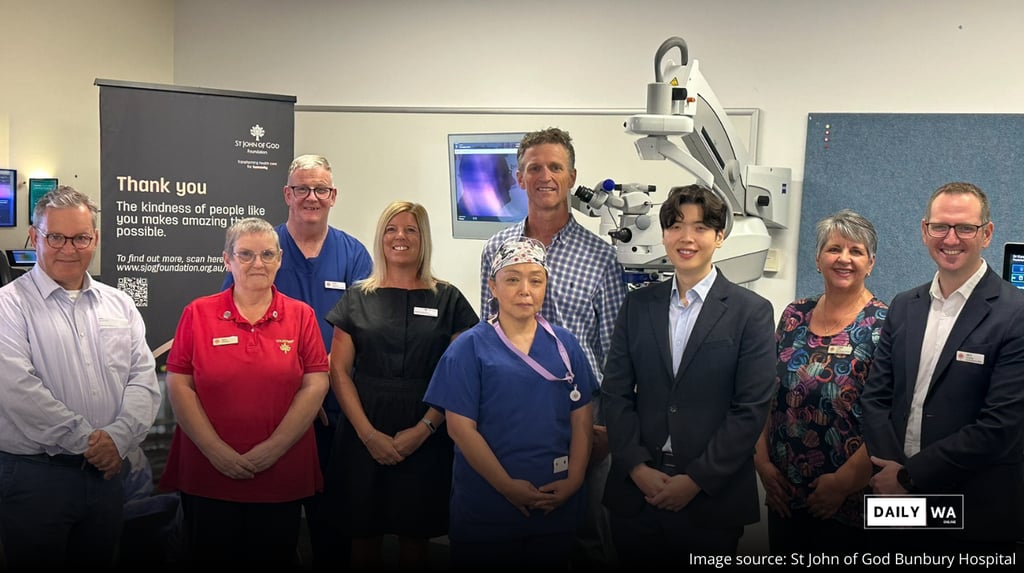
The landscape of specialized healthcare in Southwest Western Australia has reached a significant milestone with the introduction of advanced vitreoretinal surgery capabilities. For the first time in the region’s history, residents no longer need to endure the stressful journey to Perth for critical, sight-saving procedures. This breakthrough centers on a new $750,000 surgical suite at St John of God Bunbury Hospital, which bridges a long-standing gap in local medical services. Historically, local ophthalmic capabilities were restricted to "front-of-the-eye" procedures, such as cataract removal or corneal treatments. The arrival of this innovation allows surgeons to access the posterior segment, or the "back-of-the-eye," where the retina and vital neural tissues reside.
The centerpiece of this innovation is the Alcon Unity VCS (Vitreoretinal Cataract System), a cutting-edge platform that integrates high-precision fluidics and ultra-high-speed cutting technology. This allows for the delicate removal of the vitreous gel and the repair of the retina with unprecedented stability. When dealing with conditions like retinal detachment, the architecture of the eye is under extreme threat; the Unity VCS maintains near-physiologic intraocular pressure ($IOP$), which significantly reduces surgical trauma and accelerates patient recovery. By combining this with the Zeiss ARTEVO 800 digital microscope, surgeons can now operate using a "heads-up" 3D display, providing a high-definition, panoramic view of the internal ocular environment that was previously unavailable in regional settings.
For patients facing a sudden loss of vision, every hour is a critical variable in the equation of recovery. Retinal detachment is a medical emergency that often requires intervention within 24 to 48 hours to prevent permanent blindness. Until recently, Southwest residents faced the daunting prospect of a multi-hour drive to metropolitan centers during their most vulnerable moments. The establishment of a local vitreoretinal hub, led by experienced specialists like Dr. Alex H Kang, transforms this emergency workflow. Local access means that the time between diagnosis and the first surgical incision is slashed, directly improving the statistical likelihood of full sight restoration.
The successful implementation of this program is a testament to the power of community-driven healthcare. The $750,000 investment was made possible through a collaborative effort involving the St John of God Foundation and substantial contributions from local donors. Key highlights of this regional shift include:
Regional Autonomy: The first facility in the Southwest capable of "back-of-the-eye" microsurgery.
Reduced Patient Burden: Eliminates the physical and financial strain of traveling to Perth for follow-up and emergency care.
Advanced Visualization: Integration of 3D digital microscopes for enhanced surgical precision.
Community Funded: A project built on the generosity of local organizations and private citizens.
This innovation does more than just upgrade a hospital’s equipment list; it provides a safety net for the community. By hosting world-class technology like the Unity VCS locally, the region is now better equipped to attract and retain top-tier medical talent, ensuring that the future of eye health in the Southwest is as bright as the vision it seeks to protect.
All rights belong to their respective owners. This article contains references and insights based on publicly available information and sources. We do not claim ownership over any third party content mentioned.
DAILY WA © 2025
Daily WA Online is an independent news and media platform covering Western Australia. Owned by TMFS International Pty Ltd., we publish local stories, business insights, lifestyle features, and community voices for the digital era.