
The High Stakes of Arson: Why WA Authorities Offer 25,000 Dollar Rewards for Bushfire Information
As bushfire threats intensify across Western Australia, authorities are offering substantial rewards to encourage critical information sharing and deter acts of arson that place lives, livelihoods, and ecosystems at risk.
NEWS & CURRENT AFFAIRS

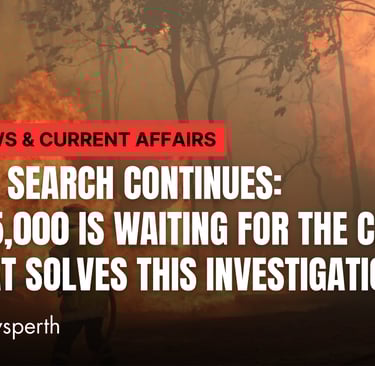
Bushfires are an enduring reality of life in Western Australia, yet when fire is deliberately lit, the consequences escalate from natural hazard to preventable catastrophe. Each year, arson related fires place enormous strain on emergency services, devastate communities, and leave long lasting scars on landscapes and local economies. Against this backdrop, the decision by WA authorities to offer rewards of up to 25,000 dollars for information leading to arrests in bushfire cases reflects the gravity of the threat and the urgency of public cooperation.
Arson is not a minor offence. It is a crime with the potential to destroy entire communities within hours. In a state defined by vast distances, extreme weather conditions, and flammable environments, deliberately lit fires can quickly overwhelm even the most prepared response systems. Authorities understand that early intelligence is often the difference between containment and disaster. Reward programs are therefore designed not as incentives alone, but as tools to break silence, overcome fear, and encourage timely reporting.
The scale of the reward signals how seriously the risk is taken. Investigations into bushfire causes are complex and time sensitive. Evidence can be destroyed by fire itself, weather conditions, or delayed reporting. In many cases, successful prosecutions rely on information from the public. Witnesses may notice suspicious behaviour, unusual vehicles, or patterns of activity that are invisible to surveillance systems. Financial rewards help elevate the importance of sharing such information and acknowledge the role communities play in protecting one another.
The cost of arson extends far beyond emergency response. Fires disrupt power networks, close roads, damage agricultural land, and displace families. Businesses lose stock and income. Tourism declines. Recovery can take years, particularly in regional areas where resources are already stretched. Studies into disaster economics consistently show that prevention and early intervention cost a fraction of long term recovery. By encouraging information that leads to arrests, authorities are investing in prevention at its most direct level.
There is also a strong deterrence element. Publicising rewards reinforces the message that arson is actively investigated and taken seriously. It signals that anonymity is not guaranteed and that communities are alert. In behavioural terms, this shifts the risk calculation for potential offenders. When the likelihood of being reported increases, the perceived cost of committing the crime rises. Reward programs therefore serve both investigative and preventative functions.
Community psychology plays a central role in this approach. Many people hesitate to report suspicions due to uncertainty, fear of being wrong, or concern about retaliation. A clearly communicated reward reframes reporting as a responsible and valued act. It reassures individuals that their information matters and that authorities are committed to acting on it. In high risk environments, trust between communities and emergency agencies becomes a critical asset.
The use of rewards also reflects lessons learned from previous fire seasons. Inquiries and post incident reviews frequently highlight the importance of early detection and community intelligence. While technology such as cameras, satellites, and fire modelling has advanced, it cannot replace local awareness. People on the ground remain the most immediate source of insight. Reward schemes recognise this reality and formally integrate the public into the prevention framework.
From a governance perspective, offering significant rewards demonstrates proportionality. The potential harm caused by arson justifies extraordinary measures. Lives are at stake, including those of firefighters and volunteers who place themselves in danger responding to deliberately lit fires. Protecting them requires robust strategies that address the human causes of bushfires as seriously as the environmental ones.
There is also a broader social message embedded in these programs. Bushfire safety is not solely the responsibility of emergency services. It is a shared obligation. By inviting the public to participate actively in prevention, authorities reinforce a culture of collective responsibility. Communities that see themselves as partners in safety are more resilient, more prepared, and more responsive when threats emerge.
At a strategic level, the reward system reflects principles that apply across high risk environments. When stakes are high, systems must encourage transparency, early reporting, and decisive action. At TMFS, we see similar dynamics in sectors where risk management depends on timely information and shared accountability. Whether in public safety, infrastructure, or governance, outcomes improve when individuals feel empowered to speak up and systems are designed to respond effectively.
As WA faces longer fire seasons and more extreme conditions, the importance of addressing deliberate ignition will only grow. Rewards for information are not a cure all, but they are a critical component of a broader prevention strategy that includes education, enforcement, and community engagement. They acknowledge a hard truth. Stopping arson before a fire starts can save lives, landscapes, and livelihoods.
The 25,000 dollar reward is therefore not about money alone. It is about signalling urgency, valuing community vigilance, and reinforcing the shared responsibility of protecting Western Australia from one of its most destructive threats. In an environment where minutes matter, information can be the most powerful tool of all.
All rights belong to their respective owners. This article contains references and insights based on publicly available information and sources. We do not claim ownership over any third party content mentioned.
DAILY WA © 2025
Daily WA Online is an independent news and media platform covering Western Australia. Owned by TMFS International Pty Ltd., we publish local stories, business insights, lifestyle features, and community voices for the digital era.