
The Strategic Vision Behind Australia’s $30 Billion Submarine Shipyard
Prime Minister Anthony Albanese commits $3.9 billion toward a $30 billion shipyard in Adelaide, securing Australia's AUKUS submarine future and creating 10,000 jobs.
BUSINESS & ECONOMY
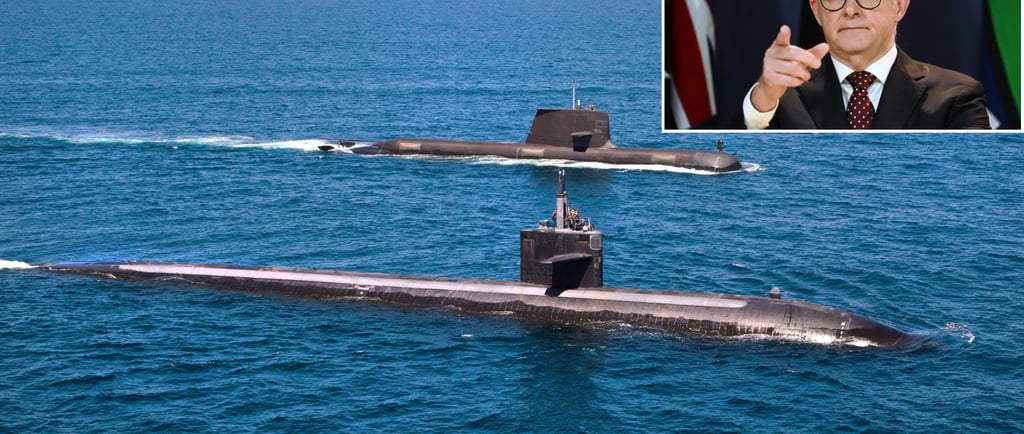
The landscape of Australian naval defense and industrial capability has shifted decisively with the federal government's commitment of a $3.9 billion "down payment" toward the construction of a state-of-the-art submarine shipyard in Osborne, Adelaide. This initial funding serves as the cornerstone for a total $30 billion infrastructure investment designed to support the domestic production of nuclear-powered submarines under the AUKUS partnership. Prime Minister Anthony Albanese, while speaking at the Osborne site, described the move as a vital step for the nation’s future, stating that "investing in the Submarine Construction Yard at Osborne is critical to delivering Australia’s conventionally-armed, nuclear-powered submarines." The Prime Minister emphasized that his government would "always back continuous naval shipbuilding and advanced manufacturing," noting that the project is not only about defense but about securing the long-term growth of local industry. This strategic vision aims to end the historical "boom and bust" cycles of naval construction by providing a permanent, decades-long pipeline of work.
The scale of the project is difficult to overstate, representing the largest single investment in South Australian history. Premier Peter Malinauskas characterized the announcement as a "watershed moment" for the state’s economy, remarking that "the scale of the work coming our way is difficult for most people to comprehend." The Premier highlighted that the $30 billion price tag covers the infrastructure of the yard alone—"before a single widget on the submarine has been procured." He added that this investment "boggles the mind" and will fundamentally lift the economic complexity of the state by fostering world-class research and development. By the time the facility is fully operational in 2040, it will be ten times larger than existing naval developments in the region, standing as a testament to Australia’s ability to manage some of the most complex engineering tasks in the world. As the Prime Minister noted, this isn't just a defense project; it’s a generational industrial shift that ensures "Australia can defend ourselves with the most advanced technology available."
All rights belong to their respective owners. This article contains references and insights based on publicly available information and sources. We do not claim ownership over any third party content mentioned.
DAILY WA © 2025
Daily WA Online is an independent news and media platform covering Western Australia. Owned by TMFS International Pty Ltd., we publish local stories, business insights, lifestyle features, and community voices for the digital era.