
Transperth Expands Peak Hour Services in Major Public Transport Overhaul
A strategic increase in peak hour services aims to ease congestion, enhance commuter experience, and support Perth’s growing urban mobility needs.
NEWS & CURRENT AFFAIRS

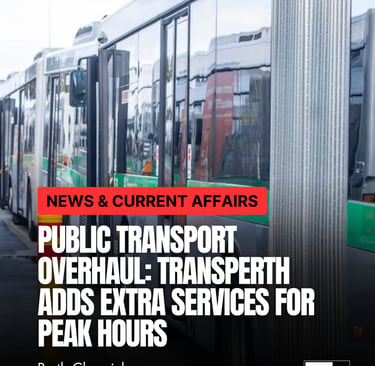
Public transport shapes the rhythm of a city. It determines how people move, how long they wait, and how reliably they transition between work, home, and the spaces that connect daily life. When that rhythm falters, the entire community feels the strain. For Perth commuters, peak hour congestion has long been a source of frustration, reflecting pressures created by population growth and evolving travel patterns. The recent announcement of additional Transperth services during peak times marks a decisive effort to restore balance, strengthen efficiency, and prepare the network for the future.
This overhaul arrives at a time when public expectations for reliability and comfort are higher than ever. Modern cities rely on transport systems that can absorb demand spikes without compromising performance. The introduction of extra services across key train and bus routes signals an understanding of these pressures. It primes commuters to anticipate shorter wait times, less crowding, and a more predictable journey that aligns with the pace of Perth’s expanding workforce.
One of the most significant impacts will be felt on major rail lines, where increased frequency can dramatically improve flow during the morning and afternoon peaks. Studies in urban mobility consistently show that even minor reductions in platform congestion lead to smoother boarding, fewer delays, and a more positive commuter experience. By adding additional services, Transperth is reducing pinch points that have historically slowed the network and contributed to cascading delays.
Bus services are also receiving substantial reinforcement. Perth's suburban growth has created transport demands that outpace older scheduling frameworks. Commuters in rapidly developing areas often report overcrowded buses and unpredictable arrival times. Extra peak hour services help fill these gaps, providing greater flexibility and reducing strain on existing routes. When passengers can rely on consistent service, entire communities experience enhanced connectivity to education, employment, and essential services.
Behind these operational improvements lies a broader strategy aimed at futureproofing the network. Perth's population is projected to continue growing, and infrastructure must evolve in anticipation rather than reaction. Transport planners are leveraging real time data, passenger flow analytics, and capacity modelling to identify where additional services will have the greatest impact. This data informed approach aligns with international best practice and ensures resources are deployed where they can deliver measurable value.
The overhaul also reflects a shift toward promoting public transport as a preferred commuting option. Reduced congestion and improved reliability encourage more people to leave their cars at home, easing pressure on major roads and contributing to environmental sustainability. Cities that successfully shift commuter behaviour often begin with precisely these types of low friction improvements that make the public transport experience smoother and more dependable.
For commuters, the benefits extend beyond convenience. Reliable transport supports work life balance, reduces stress, and provides a sense of stability during the busiest hours of the day. Employers also stand to gain. Improved transport networks help reduce late arrivals, support flexible working arrangements, and contribute to overall workforce productivity. When transport systems work well, everyone connected to them thrives.
These enhancements also highlight the importance of operational resilience. A system that runs efficiently under pressure is one that has been thoughtfully designed and tested through scenario analysis. At TMFS, we recognise the parallels between strong transport planning and strong organisational planning. Both require foresight, evidence based decision making, and the ability to adapt quickly when circumstances change. These principles guide how we support organisations facing complex challenges that demand clarity and strategic alignment.
As Transperth prepares to roll out these additional services, the message to commuters is one of commitment and progression. Western Australia is investing in the everyday experiences of its residents, ensuring the infrastructure that supports the city keeps pace with its growth. The improvements may appear incremental on the surface, but collectively they represent a meaningful shift toward a more agile and commuter centric transport network.
In the coming weeks, passengers across Perth will begin to feel the difference. The expanded services invite them to step into a transport experience defined by reliability and ease rather than congestion and delay. They also invite a broader reflection on how thoughtful planning and consistent improvement can reshape public expectations and strengthen community confidence.
As Perth continues to evolve, TMFS remains committed to championing strategies that enhance public systems, improve daily life, and position Western Australia for a resilient and dynamic future.
All rights belong to their respective owners. This article contains references and insights based on publicly available information and sources. We do not claim ownership over any third party content mentioned.
DAILY WA © 2025
Daily WA Online is an independent news and media platform covering Western Australia. Owned by TMFS International Pty Ltd., we publish local stories, business insights, lifestyle features, and community voices for the digital era.