
Truck Breakdown Triggers Major Freeway Congestion in Perth
A truck breakdown on a major Perth freeway has caused significant congestion, disrupting peak hour traffic and prompting warnings for motorists to expect delays.
TECHNOLOGY & INNOVATION
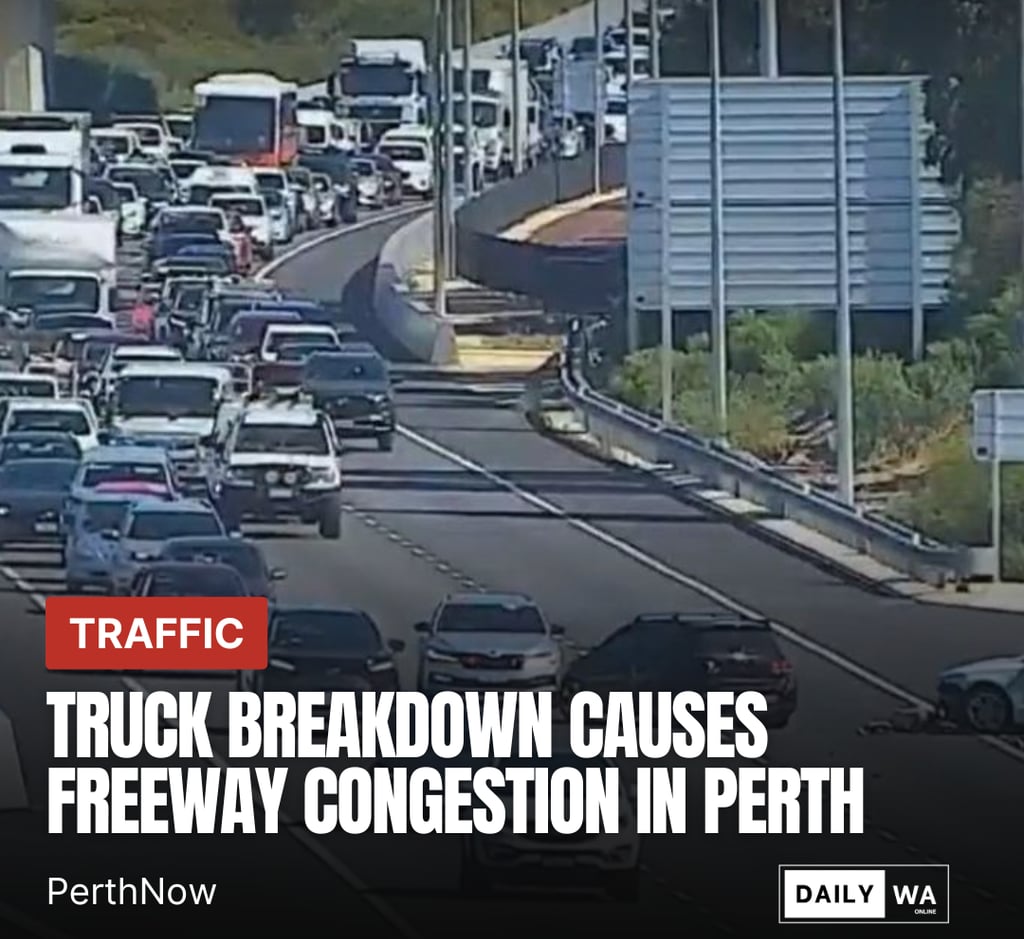
A single mechanical failure has rippled across Perth’s road network after a truck breakdown brought traffic to a crawl on one of the city’s key freeways.
The incident occurred during a busy travel period, compounding delays as lanes were restricted to allow roadside assistance and traffic management crews to respond. Motorists reported long queues stretching well beyond the immediate breakdown site, with flow slowing across connecting on ramps and feeder roads.
Perth’s freeway corridors serve as critical arteries linking residential suburbs, commercial districts, and freight routes. When a heavy vehicle becomes immobilised, the impact is immediate. Reduced lane capacity forces vehicles into tighter merges, increasing the likelihood of secondary congestion.
Authorities have urged drivers to remain patient and consider alternate routes where possible. Even after the vehicle is cleared, traffic density often takes time to normalise as bottlenecks gradually ease.
Heavy vehicles play a vital role in supporting economic activity, transporting goods across metropolitan and regional areas. However, their size and weight mean that breakdowns create disproportionate disruption compared to smaller vehicles.
Traffic management teams typically prioritise swift clearance to minimise compounding delays. Coordination between tow operators, road authorities, and police ensures safety for both stranded drivers and passing traffic.
In Perth, growing population and freight volumes have intensified reliance on freeway networks. Peak periods leave little margin for unexpected incidents, making even routine mechanical failures disruptive.
Motorists are reminded to maintain safe distances and avoid abrupt lane changes in congested conditions. Sudden braking in stop start traffic can lead to rear end collisions, further escalating delays.
Urban mobility resilience depends on both infrastructure capacity and incident response efficiency. While major upgrades have expanded certain corridors, unplanned disruptions remain an unavoidable part of metropolitan transport systems.
At TMFS, we observe that contingency planning in transport networks must account for minor incidents with major consequences. Real time updates and adaptive routing help reduce cumulative impact when flow is interrupted.
As recovery crews work to remove the disabled truck, traffic is expected to ease progressively. For commuters caught in the slowdown, the episode is a reminder of how tightly balanced peak hour travel can be.
Freeways are designed for movement. When that movement stalls, even briefly, the effects are felt widely. Patience and awareness remain essential until conditions return to normal.
All rights belong to their respective owners. This article contains references and insights based on publicly available information and sources. We do not claim ownership over any third party content mentioned.
DAILY WA © 2025
Daily WA Online is an independent news and media platform covering Western Australia. Owned by TMFS International Pty Ltd., we publish local stories, business insights, lifestyle features, and community voices for the digital era.