
United States Withdraws from World Health Organization in Major Shift in Global Health Policy
The United States has formally withdrawn from the World Health Organization following an executive order signed by Donald Trump at the start of his second term, reshaping global health diplomacy and raising concerns about future pandemic coordination.
NEWS & CURRENT AFFAIRS
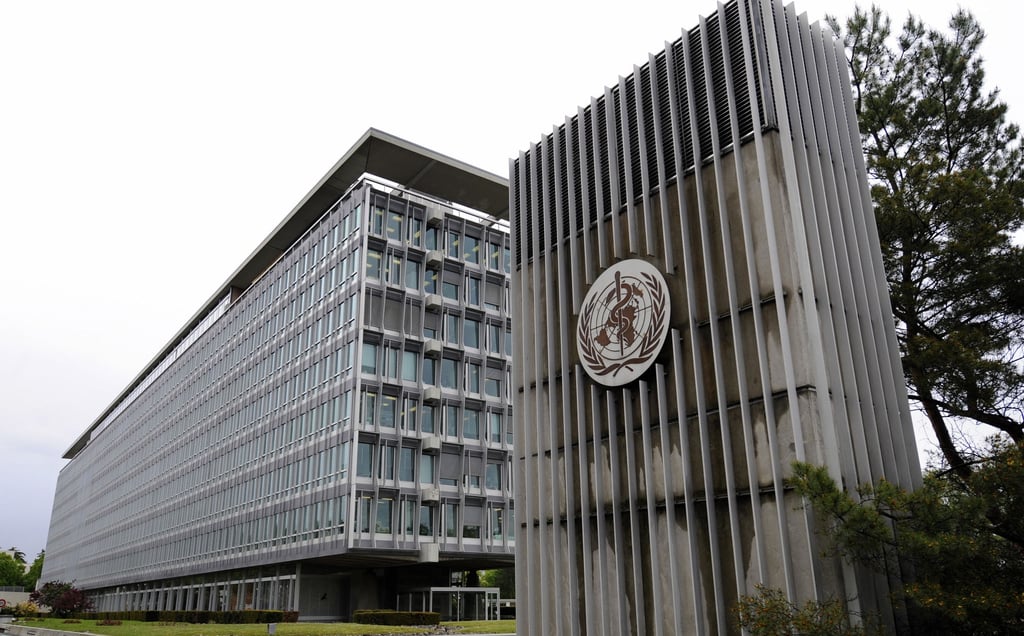
A decisive change in global health governance has taken shape following the formal withdrawal of the United States from the World Health Organization. The move was enacted through an executive order signed by Donald Trump on the first day of his second term in office, signalling a sharp break from decades of American engagement with the world’s leading public health body.
The decision marks one of the most significant shifts in global health diplomacy in recent history. The United States has traditionally been one of the WHO’s largest financial contributors and most influential members, playing a central role in shaping international responses to disease outbreaks, vaccination programs, and health system development. Its withdrawal alters both the funding landscape and the political balance within the organisation.
The administration has framed the move as a matter of sovereignty and accountability, arguing that global institutions should be subject to stronger oversight and national control. Critics, however, warn that disengagement from multilateral health frameworks risks weakening collective preparedness at a time when cross border threats are increasing rather than receding.
Global health experts have expressed concern about the implications for pandemic response. Infectious diseases do not respect national borders, and coordinated surveillance, data sharing, and rapid response mechanisms are central to containment efforts. The absence of the United States from formal WHO structures may complicate information flow, delay joint action, and reduce the effectiveness of early warning systems.
The withdrawal also carries financial consequences. US funding has supported programs targeting polio eradication, malaria control, maternal health, and emergency response in low income countries. A sudden reduction in resources places pressure on other member states to fill the gap or forces the scaling back of initiatives that rely on predictable funding streams.
Diplomatically, the move reshapes alliances. Health cooperation has long functioned as a stabilising channel even during periods of political tension. Stepping away from the WHO reduces opportunities for engagement on neutral ground, where scientific consensus often bridges geopolitical divides. Other major powers are now expected to exert greater influence over the organisation’s future direction.
There are domestic implications as well. While withdrawal does not prevent the United States from engaging in bilateral or regional health initiatives, it does remove a key platform for shaping global standards that ultimately affect domestic health security. Vaccine coordination, variant tracking, and emergency response protocols are increasingly interdependent, blurring the line between national and international policy.
Supporters of the decision argue that alternative models of cooperation can replace multilateral frameworks they view as inefficient. They contend that direct partnerships and independent action offer greater flexibility. Opponents counter that fragmentation weakens resilience, particularly in crises where speed, scale, and trust determine outcomes.
The timing of the withdrawal has intensified debate. Coming amid heightened awareness of pandemic risk, antimicrobial resistance, and climate driven health threats, the move is seen by many as a test of how global systems adapt when a major player steps aside. The WHO has acknowledged the decision, noting that its mandate continues with or without US participation, but the organisation’s capacity and reach will inevitably be affected.
From a strategic perspective, the withdrawal reflects a broader recalibration of how the United States engages with multilateral institutions. Health, once viewed as a largely apolitical domain, is now firmly embedded within debates about national interest, influence, and global responsibility.
At TMFS, we observe that resilience in complex systems depends on cooperation as much as capability. Global health security is not built in isolation. It relies on shared data, coordinated action, and institutions capable of aligning diverse actors under pressure. Changes to that architecture carry long term consequences that extend beyond any single administration.
As the international community absorbs the implications of the US withdrawal, attention will turn to how gaps are managed and whether new forms of cooperation emerge. The decision represents more than a policy shift. It is a statement about the role of global institutions in an era defined by uncertainty and contested leadership.
The full impact will unfold over time, measured not only in diplomatic realignment but in preparedness when the next global health emergency arises. What remains clear is that the architecture of international health cooperation has entered a new and more uncertain phase.
All rights belong to their respective owners. This article contains references and insights based on publicly available information and sources. We do not claim ownership over any third party content mentioned.
DAILY WA © 2025
Daily WA Online is an independent news and media platform covering Western Australia. Owned by TMFS International Pty Ltd., we publish local stories, business insights, lifestyle features, and community voices for the digital era.