
WA Farmers Report Strong Grain Yield Following Mild Summer Conditions
WA farmers are reporting strong grain yields after a mild summer, delivering a boost to regional economies and reinforcing the importance of seasonal stability for the state’s agricultural sector.
BUSINESS & ECONOMY
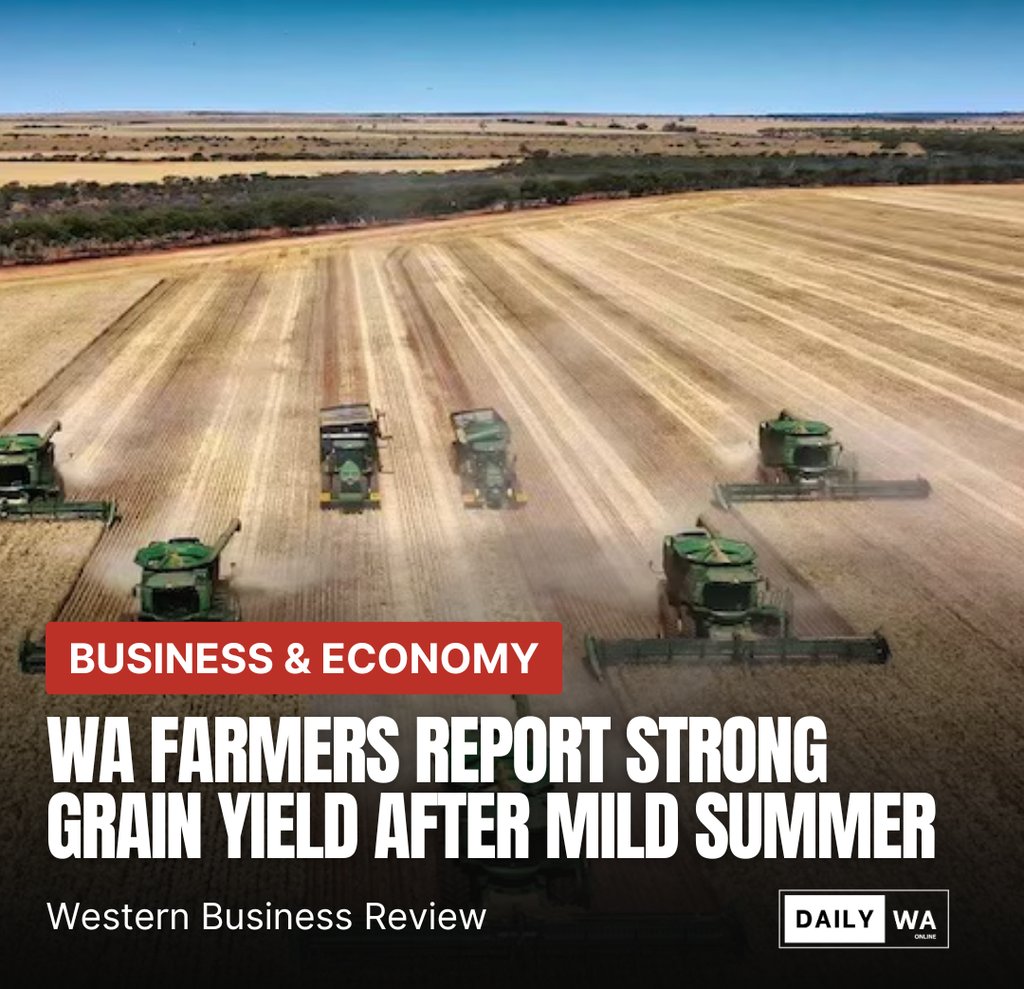
Western Australia’s grain growers are entering the season on a note of cautious optimism, with farmers across key growing regions reporting stronger than expected yields following a relatively mild summer. The outcome has provided welcome relief for producers after years marked by climate volatility, rising input costs, and ongoing pressure on margins.
The favourable conditions allowed crops to mature with less heat stress than is typical during peak summer months. Cooler temperatures and manageable rainfall patterns helped preserve soil moisture and supported grain fill, particularly for wheat, barley, and canola. For many growers, the season has delivered consistency rather than extremes, a factor often as valuable as record rainfall in determining yield quality.
Agriculture remains a cornerstone of Western Australia’s regional economy, with grain exports contributing significantly to trade income and employment. Strong yields flow through supply chains, supporting transport operators, storage facilities, exporters, and regional service businesses. In farming communities, a good season can stabilise confidence after prolonged uncertainty.
Farmers have noted that while yields are encouraging, profitability remains influenced by broader market conditions. Global grain prices, freight costs, and input expenses continue to shape final outcomes. Fertiliser, fuel, and labour costs remain elevated, underscoring that production success does not automatically translate into financial security.
The season also highlights the growing importance of adaptability in farming systems. Many producers have invested in soil management, crop rotation, and precision agriculture to make the most of favourable conditions when they occur. These practices help buffer against poor seasons and maximise returns when weather aligns.
Industry analysts have pointed to the mild summer as a reminder of how sensitive agriculture is to incremental climate shifts. Even small changes in temperature patterns can significantly influence yields. As climate variability increases, the value of seasons that avoid extremes becomes more pronounced, reinforcing the need for long term planning and resilience.
Export markets are watching closely. Western Australia is a major supplier of high quality grain to international buyers, particularly in Asia and the Middle East. Consistent output supports Australia’s reputation as a reliable producer, an advantage in competitive global markets where supply disruption has become more common.
Regional communities are already feeling the benefits. Increased harvest activity supports local employment and boosts demand for services ranging from machinery maintenance to accommodation. These flow on effects underline how agricultural performance shapes broader regional wellbeing.
From a policy perspective, strong yields renew focus on infrastructure, logistics, and market access. Efficient transport networks and port capacity are critical to turning production into export value. Investment in these systems becomes more urgent when seasons deliver above average output.
At TMFS, we observe that agricultural success is rarely the result of a single factor. It emerges from the interaction between seasonal conditions, management decisions, and system readiness. Mild summers cannot be controlled, but preparedness determines whether their benefits are fully realised.
As harvest results continue to be finalised, farmers remain mindful that conditions can shift quickly. Optimism is tempered by experience, yet there is recognition that seasons like this provide breathing room to invest, plan, and recover.
The strong grain yield reported across Western Australia serves as a reminder of the sector’s capacity to perform when conditions align. In an environment defined by uncertainty, moments of stability carry disproportionate value, reinforcing agriculture’s enduring role in the state’s economic and regional resilience.
All rights belong to their respective owners. This article contains references and insights based on publicly available information and sources. We do not claim ownership over any third party content mentioned.
DAILY WA © 2025
Daily WA Online is an independent news and media platform covering Western Australia. Owned by TMFS International Pty Ltd., we publish local stories, business insights, lifestyle features, and community voices for the digital era.