
WA Government Unveils a New Emergency Response Hub Set to Strengthen Regional Security
A strategic new emergency response hub promises to transform safety, coordination, and resilience across regional Western Australia.
NEWS & CURRENT AFFAIRS
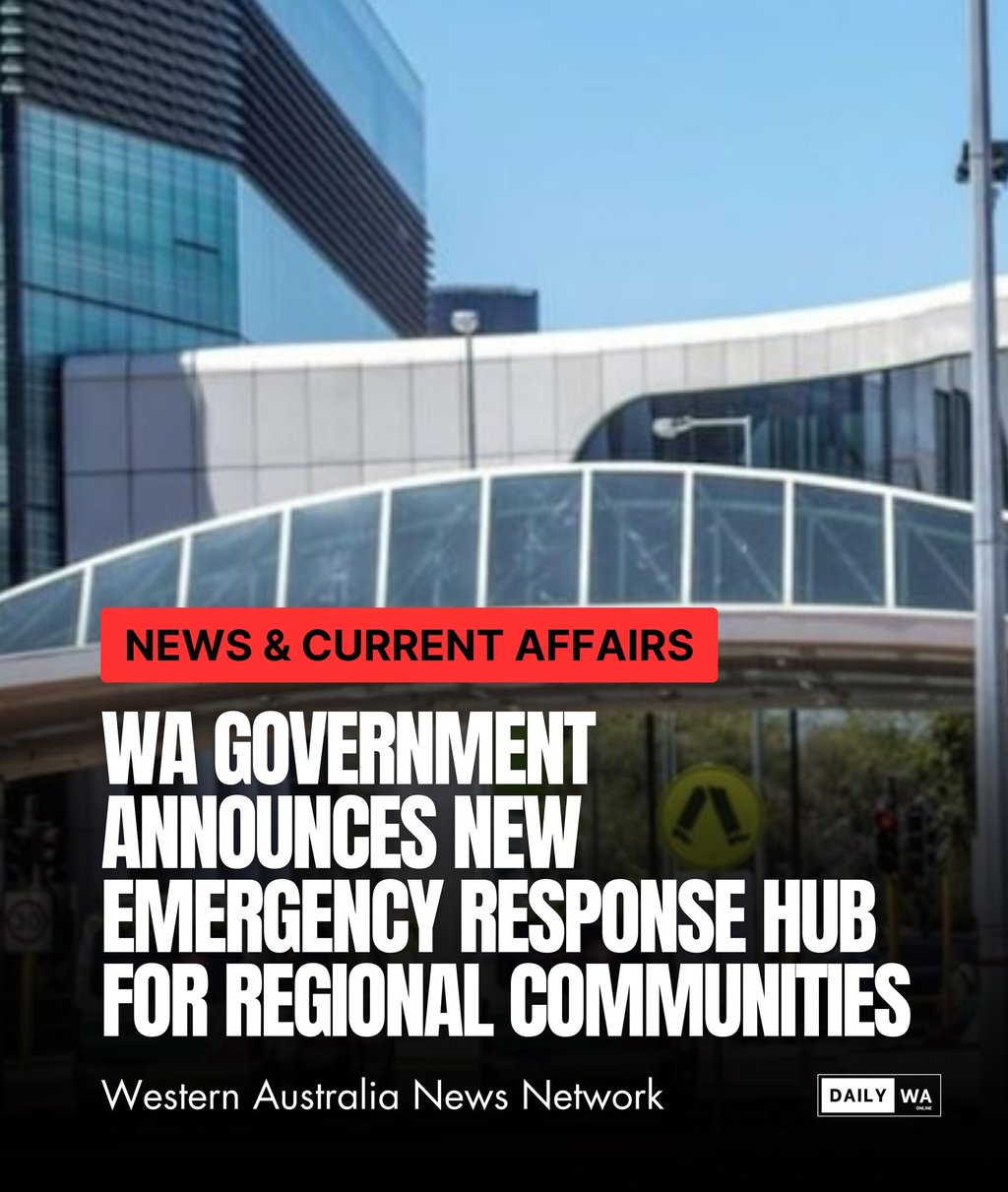
Every community relies on a sense of certainty. Yet across regional Western Australia, that certainty is often tested by distance, unpredictable weather, and the growing complexity of emergency events. When a crisis unfolds, minutes matter, and the ability to mobilise people, equipment, and information can define the difference between disruption and recovery. This is why the recent announcement of a new emergency response hub carries significance that stretches far beyond infrastructure. It signals a renewed commitment to safeguarding regional communities and strengthening the systems that protect them.
For years, emergency responders in regional areas have worked with remarkable dedication despite facing challenges that metropolitan centres rarely encounter. Long travel times and limited access to specialised resources have often placed additional pressure on local teams. By establishing a centralised hub designed specifically for the realities of regional response, the WA Government is elevating the level of preparedness that communities can expect. This new approach primes the public to see emergency readiness not as a reactive measure but as an essential investment in regional stability.
The hub is expected to integrate operations across multiple agencies, creating a shared environment where communication flows faster and collaboration becomes instinctive. In many emergency events, fragmented information can slow response times and weaken outcomes. A unified command space, supported by modern technology and data systems, helps remove those barriers. Research from national disaster resilience organisations consistently shows that coordinated response frameworks can reduce operational delays by as much as thirty percent. With regions often spread across vast distances, this improvement becomes critical.
To understand the potential impact, imagine a bushfire threatening a remote farming town. Historically, teams might have needed to relay information through several channels before receiving the full picture. With the new hub in place, emergency managers can access real time updates, deploy aerial support with greater precision, and align evacuation plans across relevant services without hesitation. These enhancements are not theoretical. They are grounded in proven disaster management practices adopted in other regions of Australia and internationally.
Another key element is training and capability building. The hub is set to become a centre for ongoing development, equipping emergency personnel with updated skills and scenario based learning. This investment recognises that technology alone cannot secure a community. People do that. When volunteers and career responders have access to world class training close to home, their confidence grows and the community’s trust in their abilities deepens. Studies from emergency management institutes highlight that regular interdisciplinary training increases response efficiency and decision making accuracy under pressure.
Beyond operational readiness, this announcement also speaks to the importance of resilience. Regional communities often feel the economic and emotional impacts of emergencies long after the immediate threat has passed. A well supported response system helps shorten recovery timeframes, protect livelihoods, and maintain community cohesion. It reinforces the understanding that preparedness is not simply a government responsibility but a shared effort where every agency, organisation, and individual has a role.
The establishment of this hub also aligns with broader strategic priorities across Western Australia. As regional populations grow and industries expand, the infrastructure that supports community safety must evolve with them. The decision to build a dedicated emergency response centre reflects a recognition of these emerging demands. It positions Western Australia as a state that anticipates challenges rather than reacts to them and sets a new benchmark for regional emergency strategy.
For organisations working within critical services, strategic planning, or community development, initiatives like this offer an important reminder. Leadership in high stakes environments requires foresight, coordination, and the ability to build frameworks that hold strong under pressure. At TMFS, these principles guide how we support partners who operate in complex and fast changing contexts. When resilience becomes a foundation rather than an aspiration, organisations are better equipped to protect their people and their purpose.
The new emergency response hub represents more than a government project. It is a message to regional Western Australians that their safety is a priority and that the systems supporting them will continue to evolve. It encourages communities to imagine a future where emergency response is faster, smarter, and more aligned with the realities of regional life. Most importantly, it reminds us that preparedness is an ongoing journey, shaped by the decisions we make today.
As regional communities look ahead, this development offers both reassurance and momentum. It invites leaders, organisations, and residents to stay engaged, stay informed, and stay ready to contribute to a more resilient future. For those committed to strengthening community capability, now is the moment to recognise the role we can each play. TMFS will continue to champion strategic planning, operational clarity, and community centred resilience as Western Australia builds the systems that will safeguard its future.
All rights belong to their respective owners. This article contains references and insights based on publicly available information and sources. We do not claim ownership over any third party content mentioned.
DAILY WA © 2025
Daily WA Online is an independent news and media platform covering Western Australia. Owned by TMFS International Pty Ltd., we publish local stories, business insights, lifestyle features, and community voices for the digital era.