
WA Police Launch Regional Road Safety Blitz as Autumn Travel Risks Rise
WA Police have launched a targeted regional road safety blitz for the autumn period, aiming to reduce serious crashes as changing conditions, fatigue, and long distance travel increase risk across Western Australia.
NEWS & CURRENT AFFAIRS
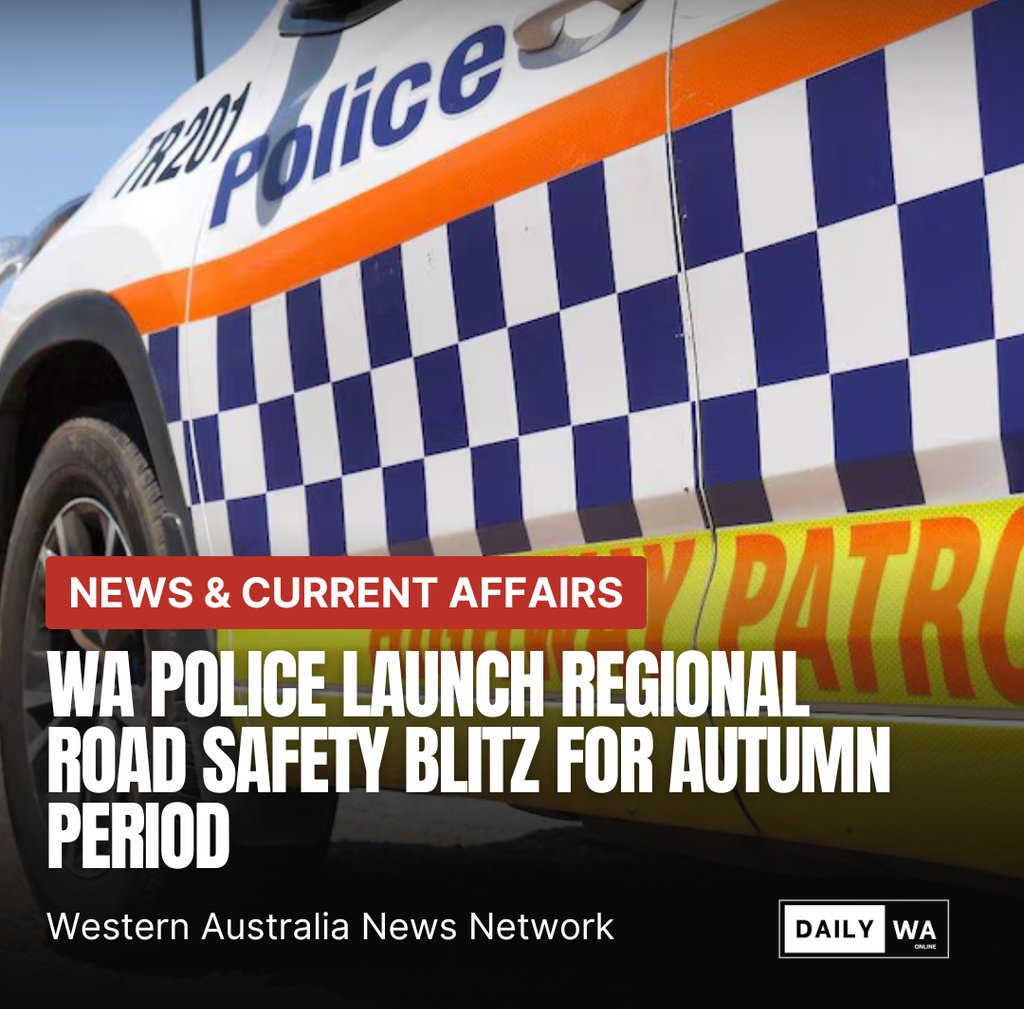
As seasonal conditions shift across Western Australia, road safety authorities are moving early to confront a familiar and persistent threat. WA Police have launched a regional road safety blitz ahead of the autumn period, focusing on high risk behaviours that continue to drive serious injuries and fatalities on country roads.
The timing is deliberate. Autumn is a transitional season that brings cooler temperatures, reduced daylight hours, and an increase in long distance travel linked to regional work, tourism, and freight movement. These factors combine to elevate risk, particularly on roads where speed limits are high, traffic volumes fluctuate, and emergency response times can be longer.
The blitz will see increased police presence across regional highways and local roads, with officers targeting speeding, impaired driving, seatbelt compliance, mobile phone use, and driver fatigue. These behaviours remain the leading contributors to fatal and serious crashes, despite years of public awareness campaigns and enforcement.
Regional roads account for a disproportionate number of deaths on Western Australia roads. Long straight stretches can encourage speed. Familiar routes can breed complacency. Fatigue, especially among drivers covering hundreds of kilometres in a single journey, remains a silent but deadly factor. Police say the blitz is designed to interrupt these patterns before they result in tragedy.
Authorities have emphasised that enforcement is only one part of the strategy. Visibility is intended to act as a deterrent, reminding drivers that risk does not diminish simply because roads appear quiet. In regional settings, a single mistake can have catastrophic consequences, particularly when vehicles collide at high speed or leave the roadway far from immediate assistance.
The focus on autumn reflects lessons learned from previous years. Data consistently shows that transitional seasons are associated with spikes in serious crashes, as drivers adjust to changing light conditions and road environments. Wildlife movement also increases during cooler months, adding another unpredictable hazard on regional roads.
Police have also flagged concern around fatigue linked to work related travel. Mining, agriculture, and freight industries rely heavily on regional road networks, and extended shifts combined with long drives increase danger. Officers will be engaging with drivers not only through enforcement, but through education at roadside stops, reinforcing the importance of rest and realistic travel planning.
For regional communities, road safety is not an abstract issue. Serious crashes ripple through towns, workplaces, and families. Each fatality represents a loss felt deeply in areas where populations are smaller and connections closer. Preventing these outcomes requires sustained attention, not just reactive policing after incidents occur.
From a broader systems perspective, road safety relies on alignment between infrastructure, enforcement, and behaviour. Police operations like this blitz address one part of that equation by reinforcing consequences and expectations. But lasting improvement depends on drivers recognising that responsibility does not ease once they leave metropolitan areas.
At TMFS, we observe that risk increases most where familiarity breeds overconfidence. Regional travel often feels routine, yet the margin for error is thinner and the consequences more severe. Interventions that disrupt complacency play a critical role in reducing harm.
WA Police have urged all motorists to treat the blitz as an opportunity to reset habits rather than a threat of punishment. Slowing down, planning breaks, avoiding distractions, and driving to conditions are decisions that protect not only the driver, but everyone sharing the road.
As autumn approaches, the message from authorities is clear. Regional roads demand respect, patience, and attention. Increased enforcement is a reminder that safety is not seasonal, even if risk patterns are.
The success of the road safety blitz will ultimately be measured not in infringement numbers, but in lives saved and injuries prevented. For communities across Western Australia, that outcome matters far more than any statistic.
All rights belong to their respective owners. This article contains references and insights based on publicly available information and sources. We do not claim ownership over any third party content mentioned.
DAILY WA © 2025
Daily WA Online is an independent news and media platform covering Western Australia. Owned by TMFS International Pty Ltd., we publish local stories, business insights, lifestyle features, and community voices for the digital era.