
WA Police to Deploy Armed Patrols in Public Spaces as Security Measures Intensify
WA Police Commissioner Col Blanch has confirmed officers will carry rifles in public spaces, including shopping centres, for the foreseeable future as part of heightened security measures following recent safety concerns.
NEWS & CURRENT AFFAIRS
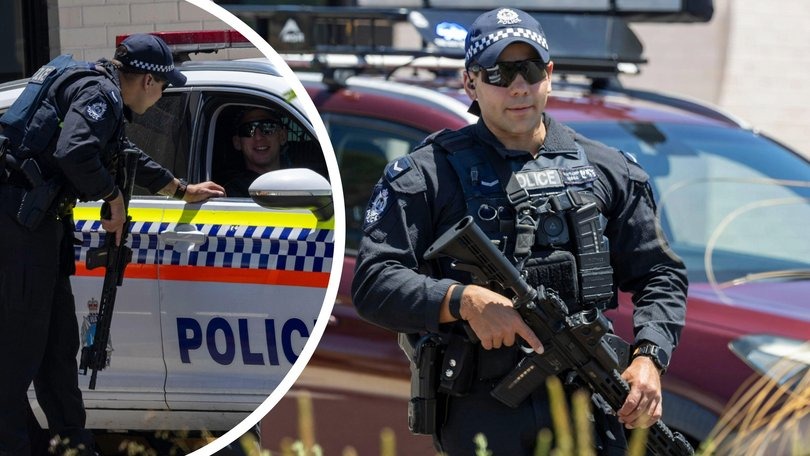
A visible shift in public security posture is set to unfold across Western Australia, with WA Police confirming that officers will be armed with rifles in public spaces for the foreseeable future. The announcement by Col Blanch signals an escalation in preventative security measures following recent concerns about public safety.
Under the directive, uniformed officers equipped with rifles will patrol high traffic locations such as shopping centres, transport hubs, and major public venues. Police have described the move as precautionary rather than reactive, aimed at deterring potential threats and providing rapid response capability in the event of serious incidents.
The decision reflects broader changes in policing strategy both nationally and internationally. In environments where risks can emerge quickly and unpredictably, authorities are increasingly prioritising preparedness and visibility. Armed patrols are intended to project readiness, reduce response times, and reassure the public that protective measures are in place.
WA Police have emphasised that officers assigned to these duties are specially trained and that protocols governing the use of firearms remain unchanged. The presence of rifles in public settings does not alter legal thresholds for engagement, but it does enhance operational capacity should an extreme situation arise.
For many members of the public, the increased visibility of firearms may feel confronting. Shopping centres and community spaces are traditionally associated with routine daily life. Introducing overtly armed patrols changes that atmosphere. Police leadership has acknowledged this tension, framing the measure as a balance between comfort and security.
Security experts note that deterrence plays a central role in such strategies. The presence of armed officers can reduce the likelihood of attempted violent acts by increasing perceived risk to offenders. At the same time, maintaining community trust is critical. Clear communication about purpose and duration helps mitigate anxiety.
The policy also underscores how public safety frameworks are evolving. Threat landscapes have shifted in recent years, influenced by global events and domestic incidents. Law enforcement agencies are adapting accordingly, aligning training, equipment, and deployment models with emerging risks.
From a governance perspective, measures of this nature are typically subject to ongoing review. Authorities assess intelligence, incident trends, and community feedback to determine whether heightened patrols remain necessary. The phrase for the foreseeable future signals that the measure is not temporary, but it is not necessarily permanent.
Community response is likely to vary. Some will welcome the visible reinforcement as reassurance. Others may question the long term implications of normalising armed patrols in everyday environments. Managing that dialogue will be an important part of maintaining confidence.
In Western Australia, public safety has traditionally relied on a model of approachable, community oriented policing. Integrating heightened tactical readiness within that model requires careful calibration to ensure visibility does not become alienation.
At TMFS, we observe that trust and transparency are as vital to security as equipment and training. When protective measures are clearly explained and proportionate to assessed risk, public cooperation strengthens. Without clarity, perception gaps can widen.
The decision to deploy armed patrols reflects a judgement that current conditions warrant increased preparedness. Whether the measure evolves over time will depend on risk assessments and broader security developments.
For now, the message from WA Police is one of vigilance. The presence of rifles in public spaces is intended as a safeguard, not a signal of imminent threat. As communities adjust to the new visibility of armed officers, the effectiveness of the strategy will be measured not only in deterrence, but in sustained public confidence.
All rights belong to their respective owners. This article contains references and insights based on publicly available information and sources. We do not claim ownership over any third party content mentioned.
DAILY WA © 2025
Daily WA Online is an independent news and media platform covering Western Australia. Owned by TMFS International Pty Ltd., we publish local stories, business insights, lifestyle features, and community voices for the digital era.