
WA Scientists Set to Host the World’s First Underwater Podcast
Scientists in Western Australia are preparing to host what is believed to be the world’s first underwater podcast, blending marine research with immersive storytelling to highlight ocean science in a bold new format.
TECHNOLOGY & INNOVATION
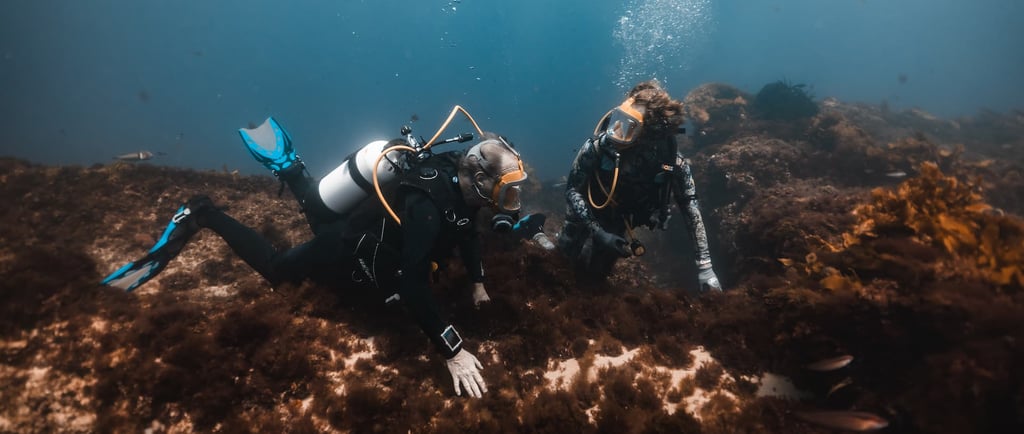
Innovation does not always happen in laboratories. Sometimes it happens beneath the surface. This month, marine scientists in Western Australia are preparing to record what is believed to be the world’s first underwater podcast, taking science communication into an entirely new environment.
The initiative aims to bring listeners closer to marine ecosystems by capturing conversations while submerged. Rather than describing the ocean from a studio, researchers will speak from within it, surrounded by the very environment they are studying. The concept merges technology, exploration, and storytelling in a way that challenges traditional formats.
Recording underwater presents unique technical demands. Standard audio equipment cannot function at depth without specialised waterproof housing and acoustic adaptation. Engineers working with the research team have developed systems capable of transmitting clear dialogue while filtering ambient noise such as currents and marine life.
The decision to host a podcast underwater is more than novelty. It reflects a growing recognition that science communication must evolve to maintain engagement. Audiences are increasingly drawn to immersive and experiential content. By situating discussion directly within the marine environment, scientists hope to create a sense of immediacy that written reports and studio interviews cannot replicate.
Western Australia’s coastline provides a fitting backdrop. Its waters are home to diverse marine habitats, from coral systems to kelp forests. Recording in situ allows researchers to reference visible features, species behaviour, and environmental conditions in real time, strengthening authenticity.
The project also underscores the importance of ocean literacy. Climate change, biodiversity loss, and marine conservation remain pressing global issues. Yet public understanding often feels distant from lived experience. An underwater podcast narrows that distance, translating research into a format designed for broader reach.
Safety has been central to planning. Divers participating in the recording are trained professionals, and strict protocols are in place to manage depth, communication, and environmental impact. Equipment has been tested to ensure it does not disturb marine life or damage sensitive ecosystems.
There is a symbolic dimension as well. Hosting a podcast underwater reflects a willingness to meet audiences where stories unfold rather than expecting audiences to adapt to conventional formats. It signals confidence in both scientific capability and creative presentation.
For researchers, the event is also an opportunity to highlight ongoing projects and conservation priorities. Discussions are expected to cover marine biodiversity, ocean health, and the challenges facing coastal ecosystems. By pairing insight with environment, the team hopes to deepen connection rather than simply transmit information.
At TMFS, we observe that effective communication amplifies innovation. Scientific breakthroughs matter, but their influence depends on how clearly they are shared. Initiatives that combine credibility with creativity often extend impact beyond traditional academic circles.
If successful, the underwater podcast could open new pathways for science engagement. It may inspire similar experiments in immersive broadcasting across other fields, blending environment and expertise in unexpected ways.
Western Australia has long been associated with marine research excellence. Hosting the first underwater podcast adds a new layer to that reputation, demonstrating that leadership in science can also mean leadership in communication.
As the recording date approaches, anticipation is building around what listeners will hear. For those tuning in, the experience promises more than a conversation. It offers a perspective shaped by currents, light, and the living ocean itself.
All rights belong to their respective owners. This article contains references and insights based on publicly available information and sources. We do not claim ownership over any third party content mentioned.
DAILY WA © 2025
Daily WA Online is an independent news and media platform covering Western Australia. Owned by TMFS International Pty Ltd., we publish local stories, business insights, lifestyle features, and community voices for the digital era.