
When Two from WA Wear Indonesia’s Colours: A Milestone in Cricket Diplomacy
Western Australia’s Michael Byrne and Josh Lynn debut for Indonesia a symbolic breakthrough in the WA–Indonesia cricket Memorandum of Understanding and a new chapter in cross-boundary sporting identity Article by DailyWAOnline Writer
PEOPLE & COMMUNITY
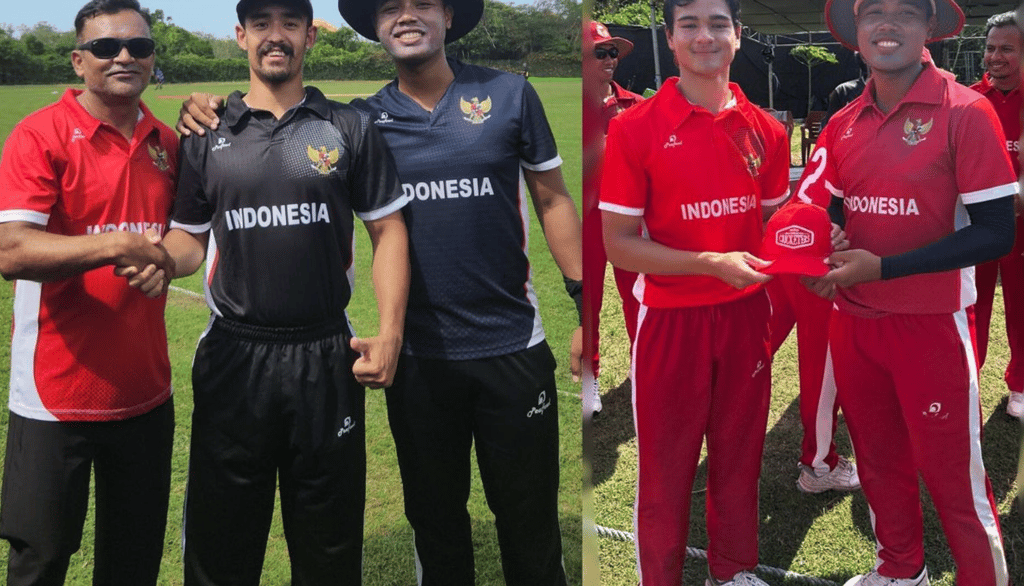
At first glance, the news reads like a footnote in cricket’s global anthology: two Western Australian players debuting for Indonesia. Yet beneath the surface lies a tectonic shift — one that entwines identity, partnership, and the evolving architecture of international sport. This is not merely a debut. It is a proof point of a strategic Memorandum of Understanding (MOU) coming to life.
Western Australia–based players Michael Byrne and Josh Lynn recently launched their international careers wearing Indonesian colours — Byrne in the tri-series clash against the Philippines, Lynn in a commanding performance against South Korea. Their elevation is more than athletic opportunity. It signals that the WA–Indonesia MOU is delivering not in abstract pledges, but in lived pathways.
The MOU: From Intention to Implementation
The foundation of this story is the MOU between WA Cricket and Persatuan Cricket Indonesia (PCI), supported by the Australia-Indonesia Institute Grants Program. The agreement commits both institutions to develop coaches, facilities, pathways, and scouting arrangements. This kind of cross-jurisdictional sporting diplomacy is rarely seamless, but here the first fruits are manifest.
Byrne, born in Indonesia and now Brisbane-based, made his debut in Bali during the Rising Asia T20I Tri-Series, contributing to Indonesia’s 45-run win over the Philippines. Lynn, 17, holds an Indonesian passport, debuted against South Korea, and earned Player of the Match honours with figures of 3-22. Their stories intersect place (WA) and heritage (Indonesia), merging the local and transnational in a single pathway.
It is worth pausing on that term — pathway. The MOU is not theoretical. It established concrete linkages: identifying players of Indonesian descent in Australia; providing them a route to national representation; and formalizing shared training, scouting, and exchange. PCI’s chairman framed Byrne and Lynn as proof that the door is open to eligible players.
That kind of structural access is rare. National teams have long drawn from diaspora talent, but too often informally. Formal agreements like this redefine what “eligibility pipelines” can look like. It primes talent in Australia to consider new avenues and strengthens Indonesia’s human capital in cricket.
The Stakes: Identity, Growth, and Institutional Confidence
Why does this matter beyond scorecards? For Indonesia, cricket is still a growth sport. International success will depend not just on grassroots expansion, but on structural leaps — coaching, facilities, competitive depth. The partnership with WA Cricket fast tracks that.
But for WA Cricket, it is also an assertion of soft power and institutional confidence. By investing in regional cricket beyond its own borders, WA positions itself as a hub, not just a jurisdiction. It signals that its development systems are good enough to export impact.
For players, it opens new alternatives. For someone like Lynn, whose progress in WA’s domestic system is strong, the option to represent Indonesia at international level gives earlier exposure, leadership roles, and accelerated visibility.
There is also a subtle narrative shift about identity in sport. Byrne and Lynn are not simply “Australians playing for another nation.” They embody dual belonging — rooted in WA’s cricket culture, tied by heritage or passport to Indonesia. Their dual trajectories destabilize old binaries. They become bridges.
Risks, Rewards, and the Path Ahead
This is not without challenges. Aligning standards, managing logistical hurdles, navigating eligibility rules, and preserving local legitimacy all risk friction. Indonesia must ensure that its domestic systems benefit in tandem; otherwise the MOU could feel extractive.
Moreover, there is expectation. These two WA players carry symbolic weight. Their performance may be read less for individual merit and more as an assessment of institutional value. If they succeed, they validate the partnership. If they falter, critics may question whether the arrangements pour into vanity rather than substance.
Yet the upside is real. Beyond the individual debuts, there is region-wide signal value. Other states or nations may emulate similar agreements. Talent that might otherwise be dormant finds pathways. Institutional boundaries soften in favour of shared growth.
For Australia-Indonesia cricket relations, this is a landmark. It entwines the future of both nations’ cricketing ecosystems. It says: growth is not linear; borders are permeable; partnerships anchored in respect and shared goals can unlock latent opportunity.
Closing: A Milestone That Speaks to the Future
When Byrne and Lynn walked onto the field in Indonesian jerseys, they carried more than bat and ball. They carried an institutional promise: that sport can transcend geography, identity can be plural, and inter-jurisdictional frameworks can produce real opportunity.
For TMFS, this is a case study in how strategic partnerships, when constructed rigorously, can turn ideology into institution, and aspiration into activation. Whether in sport, development, or cross-border sectors, it affirms our belief: the best frameworks are those that let ideas find paths.
If you are in regional sports management, diplomatic exchange, or development sectors and want to explore how to design similarly catalytic MOUs or institutional bridges, TMFS is ready to convene insight, strategy, and bespoke frameworks. Bridges open when vision meets structure — this WA–Indonesia cricket story shows how.
All rights belong to their respective owners. This article contains references and insights based on publicly available information and sources. We do not claim ownership over any third-party content mentioned.
DAILY WA © 2025
Daily WA Online is an independent news and media platform covering Western Australia. Owned by TMFS International Pty Ltd., we publish local stories, business insights, lifestyle features, and community voices for the digital era.