
When Words Get in the Way: How Comedy Finds Humour in Everyday Cultural Friction
A stand up comedy clip turns a simple everyday task into a sharply relatable moment, using humour to explore the frustrations and misunderstandings that arise from language and cultural differences.
PEOPLE & COMMUNITY
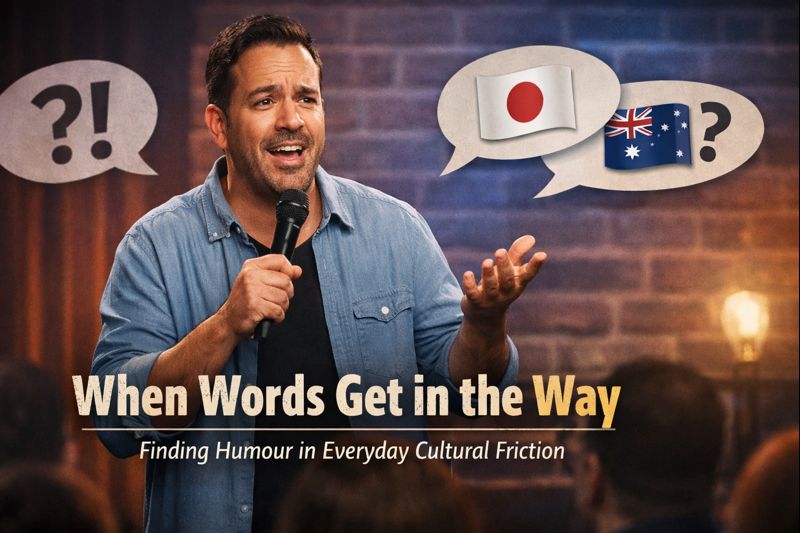
Some of the most effective comedy does not come from grand setups or exaggerated scenarios. It comes from the quiet frustration of a moment that should have been simple but was not. A recent stand up comedy clip captures this perfectly, focusing on how language and cultural differences can complicate even the most ordinary task. The humour lands because it reflects a shared experience. One where intentions are clear, yet communication somehow goes sideways.
The premise is familiar. A basic interaction unfolds, perhaps asking for help, following instructions, or completing a routine errand. What should take seconds becomes a drawn out exchange shaped by misunderstanding, assumptions, and subtle cultural gaps. The comic does not rush the moment. Instead, they let the awkwardness breathe, allowing the audience to recognise themselves in the situation.
Language is often treated as a neutral tool, but the clip exposes how emotionally charged it can be. Words carry tone, expectation, and cultural context that are not always shared. When those layers misalign, frustration builds. The comedy works because it does not mock difference. It highlights the tension that arises when people are trying to do the right thing but are operating from different reference points.
The audience response is telling. Laughter arrives not because the situation is extreme, but because it is ordinary. Many people have experienced moments where they felt understood and misunderstood at the same time. Where clarification only added confusion. Where politeness clashed with directness. The clip turns these moments into humour by recognising how universal they are.
What elevates the routine is its restraint. The comedian avoids explanation or moralising. There is no lesson delivered explicitly. Instead, the humour sits in observation. In pauses. In the recognition that cultural friction is rarely dramatic but often exhausting in small, repeated ways. That subtlety gives the comedy its authenticity.
There is also an undercurrent of empathy running through the clip. The frustration is shared rather than assigned. No one is positioned as the problem. The task itself becomes the battlefield, and language the unpredictable variable. This approach allows the humour to connect across backgrounds rather than divide them.
In workplaces, service environments, and public spaces, these dynamics play out daily. Communication styles vary. Expectations differ. What feels efficient to one person may feel abrupt to another. The comedy reflects this reality without naming it directly, making the experience accessible rather than instructional.
From a broader perspective, the clip speaks to how humour helps people process discomfort. Laughter creates distance from frustration, turning irritation into something manageable and even bonding. It allows audiences to reflect on their own reactions and assumptions without defensiveness.
At TMFS, we often observe how small communication breakdowns can influence trust, confidence, and outcomes in far larger systems. The ability to navigate difference with patience and awareness is a skill that extends well beyond language alone. Comedy that highlights these moments plays a valuable role by making the invisible visible.
The routine succeeds because it respects its audience. It assumes intelligence and shared experience. It trusts that people will recognise the situation without needing it spelled out. In doing so, it transforms a simple task gone wrong into a moment of connection.
Everyday frustrations are inevitable when cultures and languages intersect. What comedy offers is not a solution, but perspective. It reminds us that confusion is common, missteps are human, and sometimes the best response is to laugh, reset, and try again.
All rights belong to their respective owners. This article contains references and insights based on publicly available information and sources. We do not claim ownership over any third party content mentioned.
DAILY WA © 2025
Daily WA Online is an independent news and media platform covering Western Australia. Owned by TMFS International Pty Ltd., we publish local stories, business insights, lifestyle features, and community voices for the digital era.