
Why Protecting Indigenous Heritage Must Stand at the Forefront of Western Australia’s Policy Agenda
Safeguarding Indigenous heritage is essential to honouring culture, strengthening community identity, and ensuring responsible long term decision making across WA.
OPINION & VOICES
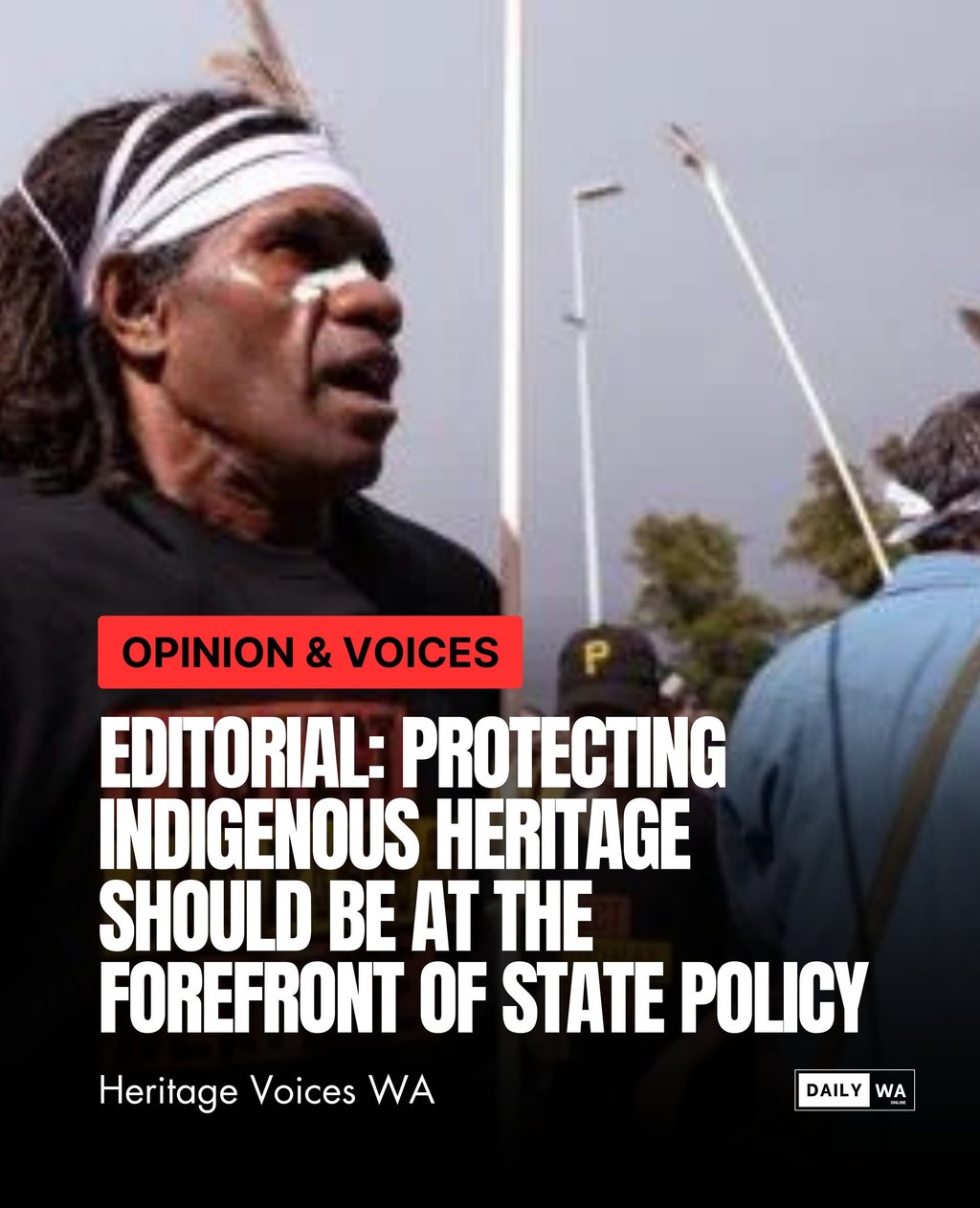

Heritage shapes the soul of a place. It carries stories, knowledge, and connections that stretch across generations, linking past and present in ways that define a community’s identity. In Western Australia, Indigenous heritage holds particular depth. It reflects tens of thousands of years of history, custodianship, and cultural continuity. Yet a recent editorial argues that despite its significance, Indigenous heritage remains vulnerable to pressures created by policy gaps, commercial interests, and inconsistent protections. The message is clear. Protecting Indigenous heritage must become a central pillar of state policy rather than a periodic consideration.
The conversation gains urgency as WA’s landscape continues to evolve through infrastructure projects, resource development, and population growth. Each of these forces places pressure on cultural sites and the knowledge they embody. The editorial primes the public to recognise that heritage protection cannot rely on reactive governance. It must be anchored in intentional policy frameworks that honour cultural responsibility, respect Traditional Owners, and ensure heritage is safeguarded long before development planning begins.
Recent history has shown the consequences of inadequate protections. Sites of profound cultural significance have been damaged or lost, leaving communities with irreversible gaps in their cultural landscape. These events have prompted national discussions about heritage legislation, consultation processes, and the balance between economic progress and cultural preservation. Research from cultural heritage institutions consistently emphasises that strong policy frameworks protect not only physical sites but also the relationships, languages, and ancestral ties connected to them. When heritage is compromised, identity and connection are compromised alongside it.
Central to effective heritage protection is genuine engagement with Traditional Owners. Consultation must be more than procedural. It must be grounded in respect, partnership, and recognition of the authority that Indigenous communities hold in determining how cultural sites should be managed. Evidence shows that collaborative decision making leads to better outcomes for both cultural preservation and project development. When Traditional Owners are involved early and meaningfully, heritage management becomes a proactive practice rather than a crisis response.
The editorial also highlights the importance of integrating cultural knowledge into state planning processes. Indigenous knowledge systems contain deep ecological, environmental, and historical understanding that has sustained WA’s landscapes for millennia. Incorporating this knowledge into modern land management, conservation, and development decision making enriches policy outcomes and aligns with global best practice. Nations that weave Indigenous knowledge into their governance models demonstrate stronger environmental outcomes, improved land stewardship, and greater cultural cohesion.
Legal protections must keep pace with contemporary expectations. Heritage legislation that lacks clarity or consistency introduces risk for communities, project proponents, and policymakers alike. Updated frameworks that define responsibilities, establish transparent processes, and provide enforceable safeguards create certainty while reinforcing cultural respect. Strong legislation signals that heritage is not an obstacle to progress but a vital component of responsible development.
Education forms another pillar of long term heritage protection. When communities understand the significance of Indigenous sites and the stories they represent, attitudes shift. Schools, public institutions, and community programs play an essential role in building awareness and fostering respect. Studies in cultural education show that increased public understanding leads to fewer incidents of preventable damage and greater support for protective policy measures. Awareness becomes a tool of preservation, empowering individuals to recognise the importance of heritage in daily life.
The editorial’s call aligns closely with broader movements across Australia seeking to strengthen reconciliation through action. Protecting heritage is not symbolic. It is a practical, tangible commitment to honouring Indigenous people and their enduring connection to the land. It represents a step toward a more equitable future where culture is safeguarded with the same seriousness as economic priority.
From a strategic standpoint, the shift toward stronger heritage protection mirrors principles that underpin effective long term planning. Resilient systems acknowledge the value of history while preparing for future needs. They recognise that cultural identity forms a foundation for social cohesion, community wellbeing, and sustainable development. At TMFS, we see these dynamics in the organisations we support. Strong decisions arise when leaders consider not only immediate outcomes but the legacy their choices create.
Protecting Indigenous heritage must be more than a policy discussion. It must become a defining commitment that shapes how Western Australia grows, governs, and defines itself. The editorial invites governments, industries, and communities to step forward with clarity, respect, and responsibility. It encourages an understanding that heritage protection strengthens the social fabric of the state and ensures future generations inherit the stories and knowledge that have shaped these lands since time immemorial.
As WA continues to navigate development and change, the path forward demands intentional leadership. Protecting Indigenous heritage is not a question of whether the state can afford to prioritise it. It is a question of whether the state can afford not to. TMFS remains dedicated to supporting approaches that honour cultural values, strengthen community partnership, and build a future where heritage protection stands at the centre of responsible progress.
All rights belong to their respective owners. This article contains references and insights based on publicly available information and sources. We do not claim ownership over any third party content mentioned.
DAILY WA © 2025
Daily WA Online is an independent news and media platform covering Western Australia. Owned by TMFS International Pty Ltd., we publish local stories, business insights, lifestyle features, and community voices for the digital era.